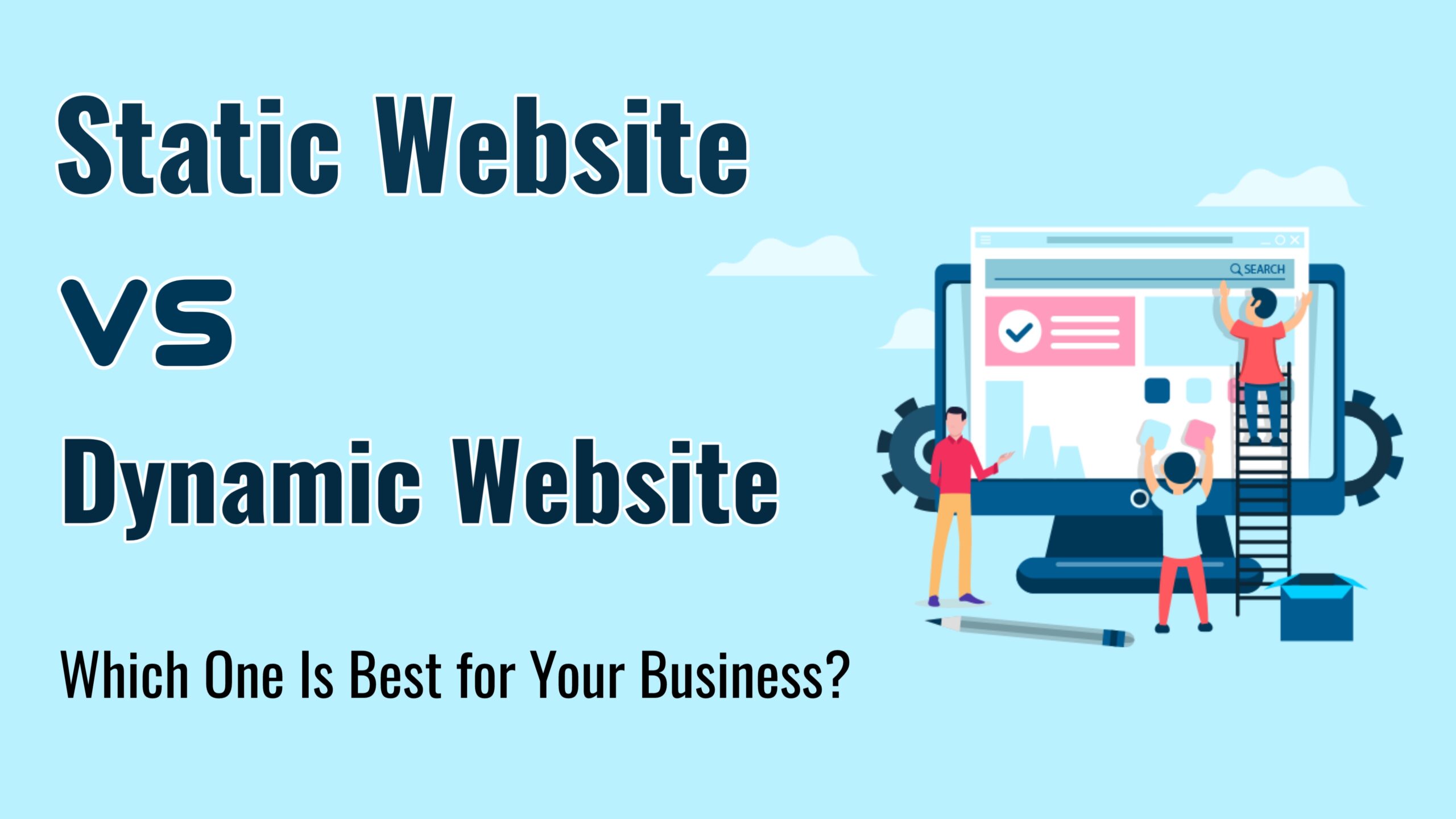
In today’s digital-first world, every business needs a strong online presence. But before getting a website, one important decision you must make is whether to choose a static website or a dynamic website. Both come with unique advantages and use cases, so understanding the differences can help you choose the right option for your business needs.
What Is a Static Website?
A static website is made of fixed HTML, CSS, and sometimes JavaScript files. Each page is created manually and remains the same unless a developer edits it. These websites are simple, fast, secure, and perfect for businesses that don’t need frequent content updates.
Key Characteristics of a Static Website
- Fixed content — each page is a separate HTML file.
- No database — pages don’t pull information dynamically.
- Faster loading speed due to simple structure.
- Lesser maintenance because nothing changes unless manually edited.
- High security because there is no backend code or database.
When a Static Website Is Ideal
- Small businesses that need an online presence.
- Portfolio websites for professionals.
- Landing pages or single-page websites.
- Churches, NGOs, or local services with rare content updates.
- Businesses with fixed information like address, services, or contact details.
What Is a Dynamic Website?
A dynamic website uses backend technologies like PHP, Python, Node.js, and databases like MySQL or MongoDB to generate page content in real time. This allows users to interact with the site, and the site to change based on user inputs.
Key Characteristics of a Dynamic Website
- Content updates automatically using admin panel or CMS.
- Connected to a database for storing and retrieving data.
- User-friendly — no coding required to update content.
- Highly scalable with features like login, dashboard, payments, etc.
- Interactive — supports blogs, forms, products, reviews, and much more.
When a Dynamic Website Is Ideal
- E-commerce stores or product catalog websites.
- Educational platforms, LMS, or membership systems.
- News, blogs, or websites requiring regular content updates.
- Businesses needing customer login or dashboards.
- Any brand planning to grow digitally with advanced features.
Major Differences Between Static and Dynamic Websites
| Feature | Static Website | Dynamic Website |
|---|---|---|
| Content Updates | Manual editing required | Easy updates via admin panel or CMS |
| Technology Used | HTML, CSS, JS | PHP, Laravel, Node.js, WordPress, Databases |
| Speed | Very fast | Fast but depends on server & database |
| Security | Highly secure | Secure if properly maintained |
| Best For | Simple websites without frequent changes | Growing businesses with advanced needs |
| User Interaction | Limited | High — forms, logins, dashboards |
Which One Should You Choose for Your Business?
The choice depends entirely on your requirements. If you want a simple, fast, and cost-effective website with minimal updates, a static website is ideal. However, if your business needs interactive features, regular updates, or future scalability, a dynamic website will serve you better.
Choose a Static Website if you want:
- Speed and simplicity
- High security with minimal maintenance
- A quick online presence
- Fixed information pages
Choose a Dynamic Website if you want:
- Blog or content management
- User accounts or online booking
- E-commerce or payment integration
- Future scalability with additional features
- Professional control through an admin panel
Why Choosing the Right Website Type Matters
Your website is the digital face of your business. Choosing the wrong type may lead to unnecessary expenses, performance issues, or limitations in future expansion. A thoughtful decision helps you:
- Improve customer experience
- Build trust and credibility
- Boost online visibility
- Scale your brand faster
- Control your digital identity effectively
Conclusion
Both static and dynamic websites serve different business needs. A static website is great for speed, security, and simplicity, while a dynamic website is ideal for growth, interactivity, and content-driven brands. By understanding their differences, you can choose the perfect web solution that supports your business goals and helps you build a strong online presence.